
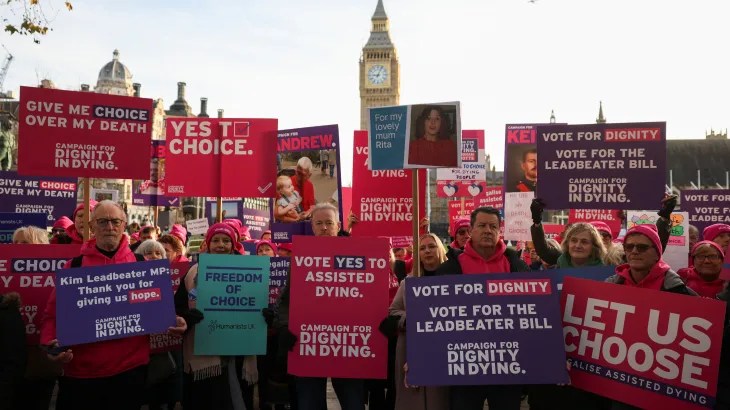
With 84% of Brits supporting this end-of-life choice, why does its legislation remain such a challenge?
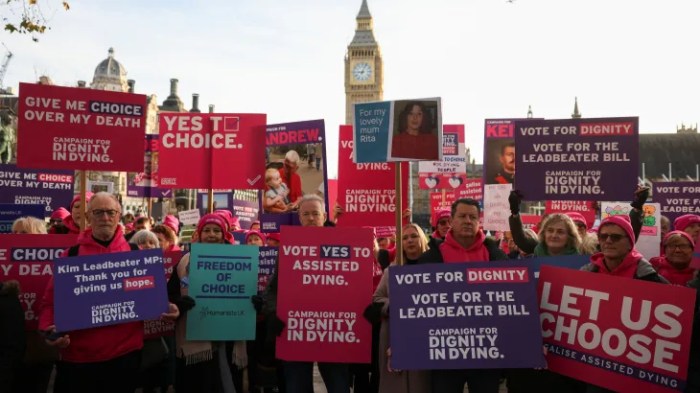
A week ago today, Kim Leadbeater’s bill to legalise assisted dying in England and Wales achieved a significant victory. Terminally ill adults in the UK, with six months or less to live, are now one step closer to gaining the legal right to end their own lives. MPs voted in favour of the bill with a margin of 330 to 275, marking a pivotal moment in the debate over assisted dying.
This news brought back painful memories of my grandmother’s battle with terminal cancer three years ago. Despite the best efforts of palliative care, nothing could truly ease the immense pain she endured – both physical and emotional. Watching her body deteriorate, coming to terms with what was happening to her, and carrying the burden of her family’s grief only deepened her suffering.
As a former nurse, she understood better than anyone that no amount of treatment would change her fate. Thus, all she wanted was to bring her suffering to an end. Watching this happen to someone I love so deeply has profoundly shaped my perspective, and now I empathise more than ever with terminally ill patients seeking the right to choose a dignified end to their lives.
Of course, the debate surrounding assisted dying is deeply complex, with many critical factors to consider. Opponents of the law argue that its introduction could lead vulnerable individuals to choose an assisted death out of fear of being a burden on their families, especially given the high cost of care. There are also significant concerns about the potential for coercion, where people may feel pressured into making such a decision.
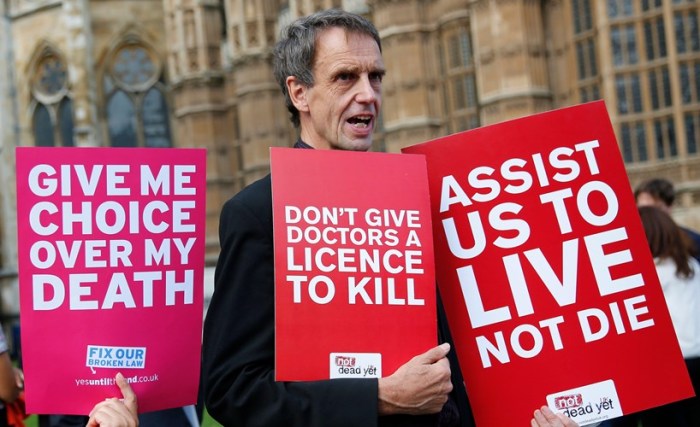
Additionally, critics emphasise the need to ensure that assisted dying is not chosen solely due to a lack of access to proper palliative care. Labour MP Rachael Maskell, an outspoken opponent of the proposal, highlighted in an interview with CNN that the NHS is not currently equipped to support assisted deaths. She stressed the importance of “sorting the NHS out before we go down this route,” pointing to the “woefully underfunded palliative system” that leaves an estimated 100,000 people without adequate care annually.
Moreover, there are concerns that the bill has been rushed through Parliament without a thorough impact assessment or sufficient time for MPs to consider its implications. Critics argue that this haste may have overlooked key factors that deserve careful examination. Unfortunately, these issues represent just a few of the significant challenges and reasons as to why many people still remain opposed to the bill.
On the other hand, assisted dying offers a compassionate and necessary choice for terminally ill individuals enduring immense suffering. It wouldn’t just push any vulnerable individual to feel obliged to die, as eligibility would be strictly limited to adults with a terminal diagnosis, confirmed by medical professionals, and a prognosis of six months or less to live. The bill also requires the individual seeking assisted dying to demonstrate the mental capacity to make the decision voluntarily, free from any form of coercion. These safeguards aim to protect vulnerable individuals while respecting the autonomy of those in genuine need.
As BBC presenter Esther Rantzen emphasised in her open letter to Parliament, “The tragic truth is that no matter how excellent the palliative care is, it cannot prevent some kinds of suffering, fecal vomiting for example, or suffocating to death, or deep-rooted agony”. A 2019 report from the Office for Health Economics (OHE) estimated that 6,394 people die each year with unrelieved pain during the last three months of life, even with access to the best possible palliative care. This equates to 17 people dying in pain every day. By sparing them months of unnecessary suffering and physical decline, assisted dying can restore dignity to terminal patients at the end of their lives. It may also alleviate pressure on the country’s strained palliative care services, creating a more sustainable system for those who need it most.
Public sentiment strongly supports the bill, with polling from the national campaign Dignity in Dying revealing that 84% of people approve giving terminally ill adults the choice of assisted dying. At the heart of the argument is the principle of individual rights: if capable individuals can end their lives by choice, denying the same option to others amounts to discrimination.
Tragically, the current lack of legal options often forces dying individuals toward desperate measures. Estimates from Dignity in Dying suggest that between 300 and 650 terminally ill people in the UK take their own lives every year, while 3,000 to 6,500 attempt to do so. These improvised deaths are often violent, dangerous, and isolating, leaving behind devastated families and friends. Loved ones not only bear the emotional trauma of witnessing these acts but may also face police investigations into “suspicious deaths”.
Ramón Sampedro became a symbol of the fight for the right to assisted dying, a battle he waged for 28 years. A Spanish seaman and writer, Sampedro’s life changed forever at the age of 25 when a diving accident left him quadriplegic, paralysed from the neck down. Unable to end his own life due to his physical condition, he dedicated half of it to challenging Spain’s legal system, seeking the right to die on his own terms and rejecting a life he no longer wanted to endure.

Sampedro’s legal journey took him through Spain’s lower courts, higher courts, and even to the European Commission on Human Rights in Strasbourg. His case rested on the argument that he was of sound mind and sure of his decision to die, yet his pleas were repeatedly denied. In response, he turned to the public, giving deeply emotional interviews on national television to argue that suicide was a fundamental right being unjustly withheld from him. In one of his writings, he poignantly stated, “A child conceived against a woman’s will is a crime. A death against a person’s will is too. But a desired child who has been conceived through love is, obviously, right. Therefore, a desired death to liberate oneself of an unrecoverable pain is too”.
Eventually, Sampedro found someone willing to help him, who prepared a cyanide cocktail, which he drank while filming himself. He ended his life while saying, “Being alive should be a right, not an obligation. I have been obliged to suffer this horrible situation for 28 years, four months and a few days.”
Given the complexity of this issue, it is essential to conduct a thorough assessment before any legislation is passed. The proposed bill will now face months of intense debate and scrutiny by MPs and peers, with the possibility of amendments or even outright rejection. Notably, at least 36 MPs who initially supported assisted dying have indicated they might reconsider their stance at a later stage. It is therefore crucial to address all concerns and potential pitfalls before finalising the bill. Here are just a few of the key amendments that should be considered to ensure the bill is ethically sound and carefully regulated:
- Patient-led decision-making: Assisted dying should never be suggested by medical practitioners; the process must be initiated solely by the patient to safeguard against undue influence.
- Reversal or review mechanisms: A clear process for patients to review or reverse their decision is critical to protect individuals who may be victims of coercion.
- Scope of eligibility: We must debate whether the bill should extend beyond terminal illnesses with a prognosis of six months or less, to include individuals living with unbearable pain who do not have a terminal condition.
These and other considerations must be thoroughly examined to ensure the legislation strikes the right balance between compassion and safeguards. However, when it comes to the fundamental question of whether the bill should exist, the answer seems clear: those directly affected by such laws should have the choice. Denying individuals the option to end their suffering is, in itself, a form of coercion – assuming they will be pressured into an assisted death underestimates the strength of safeguards and overestimates societal mistrust. What is truly forceful is denying them the right to make this deeply personal decision for themselves.
I wholeheartedly agree with Ramón Sampedro’s powerful statement before his death: “Being alive should be a right, not an obligation.” None of us chose to be born, and no one should be condemned to living a life of unrelenting suffering without the option of release. It is equally unjust for politicians, removed from the lived realities of those enduring such pain, to wield the power to deny them this choice.


 The Daily Muse
Leave a comment