
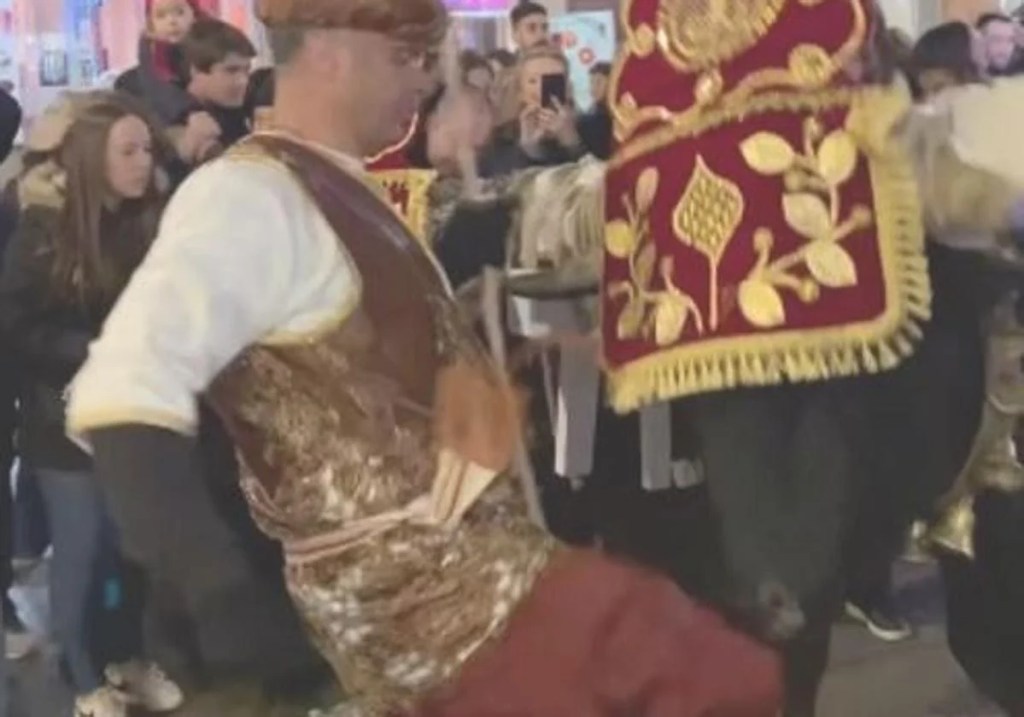
Spain in uproar over shocking cases of animal abuse during celebrations
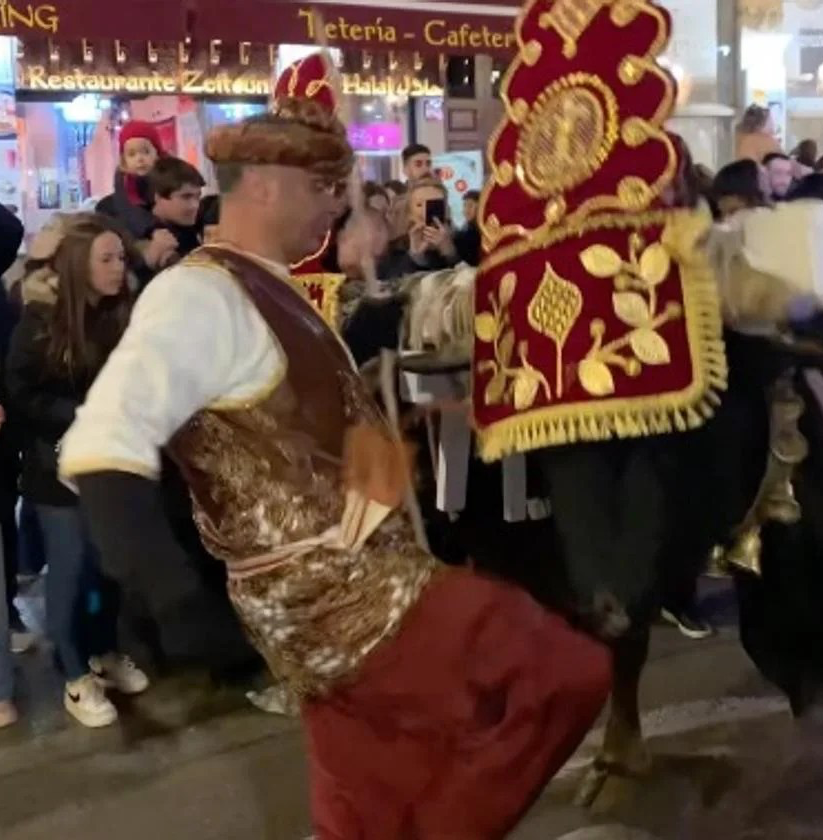
On 3 January the annual visit of the Heraldo Real (Royal Herald) took place in Granada, Spain – a cherished tradition leading up to the grand Cabalgata de los Reyes Magos (Three Kings Parade). While the event is usually a colourful tradition where children’s letters are collected and sweets are tossed to the crowd, this year’s procession took a dark turn.
A video captured a shocking moment where a member of the Herald’s entourage kneed an ox in the nose to control its movements. The act, which occurred in full view of onlookers, was immediately condemned by the person filming, who exclaimed, “Do not do that! These animals shouldn’t be here!”. She later posted the video online, igniting widespread outrage across Spain.
The video quickly went viral, drawing sharp criticism on social media. Many users condemned the act, including the Instagram account @granadasequeja, which stated: “It is outrageous that in 2025, during a children’s parade, we witness animal abuse like this. Such acts are cruel and send the wrong message to young attendees. Authorities must stop allowing animals in events that subject them to stress and mistreatment”. Another user added, “If he does this in public, what might he be doing in private?”
The Spanish Animalist Party (PACMA) called for accountability, tweeting: “These parades must take place WITHOUT ANIMALS – not only to prevent aggression but also to avoid the psychological harm it causes. How many more incidents will it take for authorities to wake up?”.
PACMA further criticised Spain’s animal welfare laws, which exclude animals other than dogs, cats, and ferrets from meaningful protection, describing them as “useless for 90% of animals”.
This is not an isolated incident. On 4 January, during a Cabalgata de Reyes Magos) in Arenas de San Pedro, Ávila, fireworks startled a group of oxen that were part of the parade, causing chaos and injuring a spectator. Podemos, a Spanish left-wing political party, condemned the town council for using animals as “elements of fun and decoration”. They pointed out that this incident violated Article 65.7 of Spain’s Animal Protection Law, which bans the use of animals in events involving pyrotechnics.
This situation not only violated the law but also posed significant risks to both the animals and the spectators, raising concerns about the safety and ethics of including animals in these traditional celebrations.
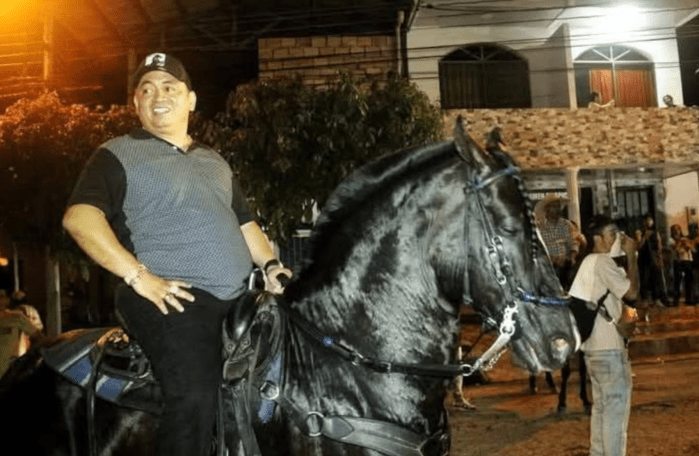
In Tolima, Colombia, another tragedy occurred on 4 January during a cabalgata where 120 horses participated. Witnesses reported severe neglect towards these animals, including dehydration. The horse ridden by the town’s mayor, Luis Ángel Gutiérrez, collapsed and died of a heart attack during the event. This incident further highlighted the widespread lack of concern for animals’ wellbeing in traditional celebrations.
A call for compassion and change
These incidents raise urgent questions about the ethics of involving animals in public festivities. While traditions are important, they should evolve to reflect modern values, including compassion and respect for all living beings. Animals subjected to these events endure stress, mistreatment, and sometimes life-threatening conditions – all for human entertainment.
It is time for stricter enforcement of existing animal protection laws in Spain and the creation of new legislation that fully prohibits the use of animals in parades, festivals, and similar spectacles. As a society, we must shift towards celebrating traditions in ways that honour the values of empathy and kindness, setting a better example for future generations.



 The Daily Muse
Leave a comment